הקשר בין אומגה 3 לקצב הלב
מאמרים נוספים שתף: שלח לנו הודעה הקשר בין אומגה 3 ממקור דגי להפרעות בקצב הלב ב 6.10.21 פורסם מאמר בכתב העת הנחשב journal Circulation, על

מאמרים נוספים שתף: שלח לנו הודעה הקשר בין אומגה 3 ממקור דגי להפרעות בקצב הלב ב 6.10.21 פורסם מאמר בכתב העת הנחשב journal Circulation, על

מידע חשוב הפרעות קשב וריכוז הפרעות קשב וריכוז הפרעות קשב וריכוז או בשמן המקצועי ADHD מסווגות כהפרעה עצבית-התפתחותית שמאופיינת בקשיי קשב, קשיי ריכוז, פעלתנות יתר
בשנת 2009 קבוצה של חוקרים מבית החולים הדסה ירושלים ביצעה ניסוי קליני על 32 חולים אשר אובחנו כחולים במחלות כלי דם של עורקי הלב. (CVD ). הניסוי הראה שבצריכה של 6 קפסולות מרווה מרושתת ביום נצפה שינוי לטובה בפרופיל השומנים בדם.
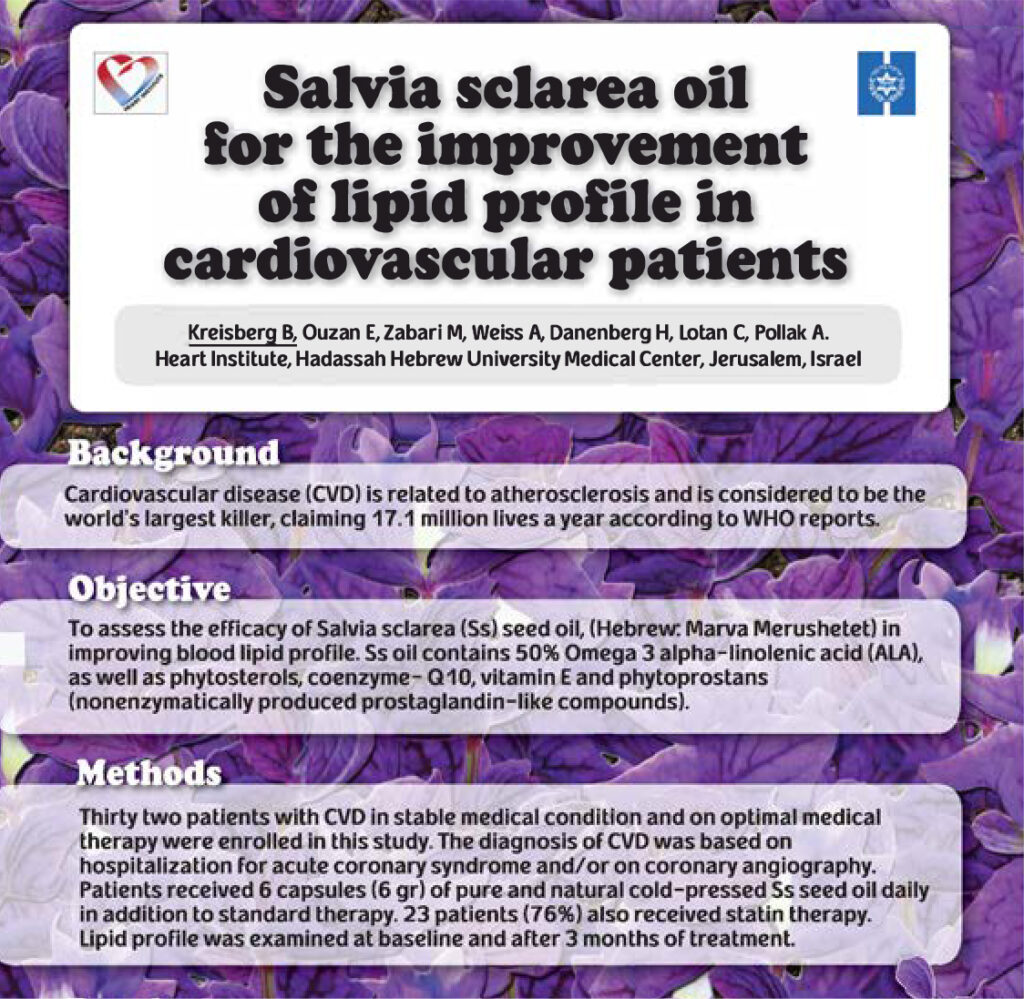
בשנת 2009 קבוצה של חוקרים מבית החולים הדסה ירושלים ביצעה מחקר קליני על 32 חולים אשר אובחנו כחולים במחלות כלי דם של עורקי הלב. (CVD )
לחולים נתנה כמות של 6 קפסולות ביום של מרווה מרושתת לתקופה של 3 חודשים, בתחילת הניסוי נבדקו המדדים הבאים:
1. ערך HDL הכולסטרול הטוב בדם המטופלים.
2. ערך ה LDL הכולסטרול הרע בדם המטופלים.
3. ערך ה הטריגליצרידים בדם המטופלים.
לאחר כ 3 חודשים נבדקו ערכים אלו בשנית.
בשנת 2009 קבוצה של חוקרים מבית החולים הדסה ירושלים ביצעה מחקר קליני על 32 חולים אשר אובחנו כחולים במחלות כלי דם של עורקי הלב. (CVD )
לחולים נתנה כמות של 6 קפסולות ביום של מרווה מרושתת לתקופה של 3 חודשים, בתחילת הניסוי נבדקו המדדים הבאים:
1. ערך HDL הכולסטרול הטוב בדם המטופלים.
2. ערך ה LDL הכולסטרול הרע בדם המטופלים.
3. ערך ה הטריגליצרידים בדם המטופלים.
לאחר כ 3 חודשים נבדקו ערכים אלו בשנית.
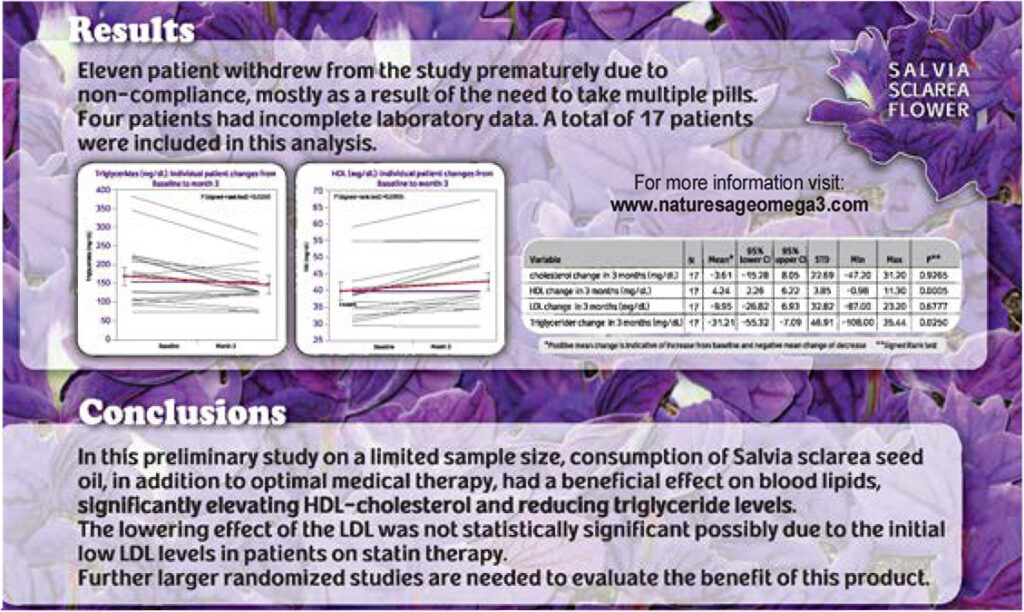
לאחר שלושה חודשים של צריכה של 6 קפסולות שמן מרווה ביום התקבלו התוצאות הבאות:
בתמונה- תוצאות ומסקנות הניסוי.
Background: Cardiovascular disease (CVD) is usually related to atherosclerosis and is considered to be the world’s largest killer, claiming 17.1 million lives a year according to WHO reports. An unhealthy diet is one of the major risk factor for CVD. Evidence from prospective cohort studies indicates that a high consumption of plant-based foods such as vegetables and fruits, grains, nuts and certain vegetable oils is associated with a significantly lower risk of CVD. The protective effects of these foods are probably mediated through beneficial nutrients contained in these foods, including mono- and poly-unsaturated fatty acids, n-3 fatty acids, antioxidants and phytosterols.
Aim: To assess the efficacy of Salvia sclarea (Ss, Hebrew: Marva Merushetet) seed oil in improving blood lipid profile. Ss oil contains 50% alpha-linolenic acid (ALA), as well as phytosterols, coenzyme- Q10, vitamin E and phytoprostans (nonenzymatically produced prostaglandin-like compounds).
Methods: 32 patients with symptoms or findings suggesting CVD who were referred to diagnostic Coronary Angiography were enrolled in this study. Patients received 6 capsules (6 grams) of pure and natural cold-pressed Ss seed oil daily in addition to standard therapy. Of note: 22 patients (70%) received statin therapy. Lipid profile was examined at baseline and after 3 months of treatment.
Results: There was a significant increase in HDL-cholesterol with treatment (37.6±4.8 mg% at baseline vs. 42.5±5.6 mg% at 3 months, p<0.05). Beneficial trends were observed in LDL-cholesterol and triglycerides levels. Conclusions: Consumption of Salvia sclarea seed oil, in addition to optimal medical therapy, has a beneficial effect on blood lipids, primarily elevating HDL-cholesterol. Further long-term studies are needed to assess hard cardiovascular endpoints